


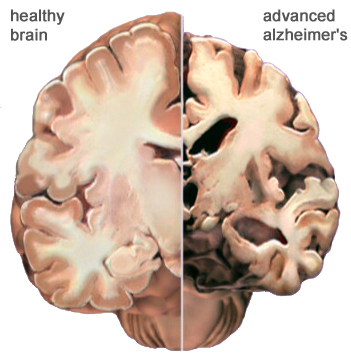
In several cases of Alzheimer’s Disease, it has been found that the roots may be due to an infectious prion-like disease, similar to the those found in cases of Bovine Spongiform Encephalopathy or Mad Cow Disease and Creutzfeldt Jakob Disease. This is according to an international study which was published earlier this week in the Molecular Psychiatry journal at the University of Texas Medical School at Houston.
The researchers used a small amount of human brain tissue with Alzheimer’s and injected it into the brains of the mice which were bred to be immune from this kind of brain alteration. However, gradually, the animals developed the disease and the tissues also spread to other parts of the brain.
According to the website of Alzheimer’s Association, Alzheimer’s is the most common form of dementia, a general term for memory loss and other intellectual abilities serious enough to interfere with daily life. Alzheimer’s disease accounts for 50 to 80 percent of dementia cases. Alzheimer’s is not a normal part of aging, although the greatest known risk factor is increasing age, and the majority of people with Alzheimer’s are 65 and older. But Alzheimer’s is not just a disease of old age. Up to 5 percent of people with the disease have early-onset Alzheimer’s (also known as younger-onset), which often appears when someone is in their 40s or 50s.
In the US alone, there are estimated 5.4 million people who have Alzheimer’s, and according to the foregoing association, it is the sixth leading cause of death in the US and the only one in the top 10 which is incurable and unpreventable.
According to the senior author of the study, Dr. Claudio Soto, who is the professor of neurology at the University of Texas Medical School at Houston, “The underlying mechanism of Alzheimer’s disease is very similar to the prion diseases. It involves a normal protein that becomes misshapen and is able to spread by transforming good proteins to bad ones. The bad proteins accumulate in the brain, forming plaque deposits that are believed to kill neuron cells in Alzheimer’s.”
Apart from injecting brain tissues with Alzheimer’s to mice breeds, they also injected another set of human brain tissue without the said disease. The results showed that none of the control breed developed signs of Alzheimer’s Disease, as compared to those mice which were injected with the tissues containing Alzheimer’s.
“The accumulation of [amyloid beta] deposits increased progressively with the time after inoculation, and the [amyloid beta] lesions were observed in brain areas far from the injection site,” the researchers stated. They also concluded that the hallmark abnormalities found among patients with AD are caused by “the accumulation of [amyloid beta] deposits increased progressively with the time after inoculation, and the [amyloid beta] lesions were observed in brain areas far from the injection site.”
They added that this finding will help in the broader and deeper understanding of the mechanisms of the disease. According to Soto, “We are currently working on whether disease transmission can happen in real life under more natural routes of exposure.”

 Enter Your Email And Click Subscribe - It's Free:

This article comes from http://www.ncbi.nlm.nih.gov/pubmed/21968933
De novo induction of amyloid-beta deposition in vivo.
Where they report “accumulation of A beta deposits increased progressively with the time after inoculation”
Earlier this year there was another paper on Alzheimer’s and A beta deposits.
Free full text online
http://www.ncbi.nlm.nih.gov/pmc/articles/PMC3162579/?tool=pubmed
1alpha,25-Dihydroxyvitamin D3 enhances cerebral clearance of human amyloid-beta peptide(1-40) from mouse brain across the blood-brain barrier”
This shows those with a higher levels of vitamin D status were better able to clear the ABeta deposits.
The problem with ageing brain arises from the decline in our ability to produce both vitamin d and melatonin as we age.
BUT both these supplements are cheap both 5000iu oil based vitamin d3 capsules and 3mg melatonin time release supplements
Melatonin interacts with amyloid beta and inhibits its agregation.
The human body is set to produce Vitamin D from dswn to dusk given exposure of skin to sunlight containing UVB and from dusk to dawn our pineal gland produces MELATONIN from dusk to dawn.
If we allowed our body to produce the natural substances in the amounts they are set up to produce then we don’t need new drugs to prevent Alzheimer’s.
We just stop the needless vitamin d/melatonin deficiency scenario.